





Payments for mobility services
Support fast, on-the-go transactions and simplify how users complete payments on mobile.
FMA-licensed payment institute
Principal member of Visa and Mastercard
PCI DSS Level 1 certified
25+ years in payments




Mobility payments happen on the move: boarding a train, unlocking a scooter, starting a parking session. There is no time to think about paying. It either works in a couple of taps, or it gets in the way. DIMOCO gives you the payment mix for those moments, led by Carrier Billing for the fastest ones.
Trusted across Europe





Mobility payments don’t follow the eCommerce playbook
Most checkout logics are built for eCommerce, where users have time to register and complete a purchase. Mobility is different. Users are outside, moving, often one-handed and distracted, and the transaction is usually small and needed right now.
A large share of that traffic is occasional. These users are not logged in and are not going to create an account to complete one trip. They want access, not a relationship. Ask them to register, enter a card or add steps, and many simply drop off.
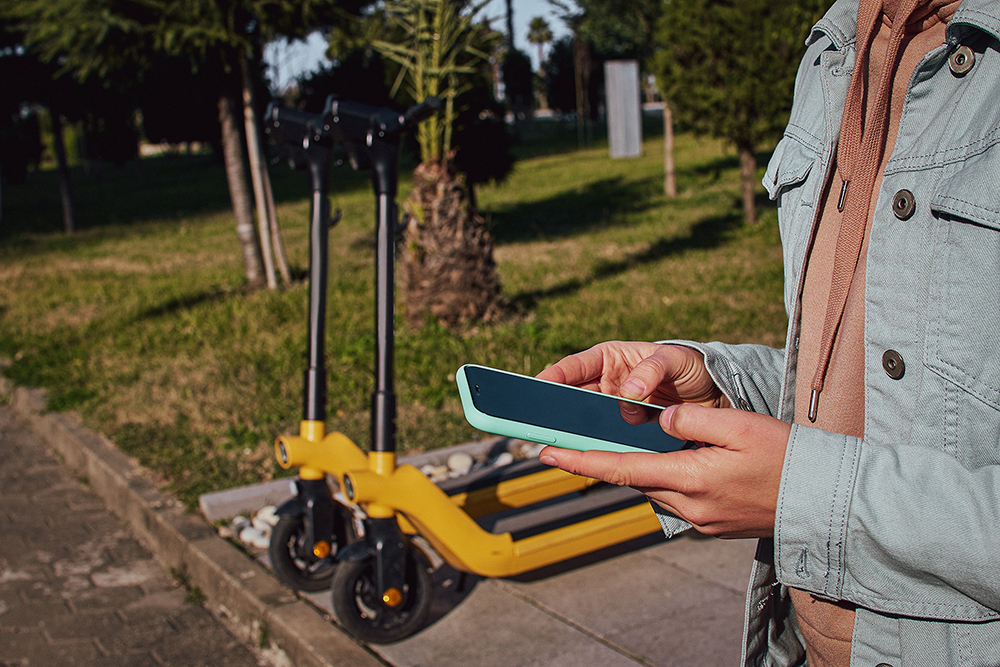
Built for how people actually pay on the move
Occasional riders
one-off users who want to pay and go, without signing up.
Repeat commuters
registered users and subscribers who expect saved, fast payment.
Micropayments
small, time-sensitive charges where manual data entry is not worth the effort.
One-handed moments
payments taken on mobile, mid-journey, with minimal interaction.
Carrier Billing: the express lane
Pay by mobile bill with minimal input
Paying by mobile bill removes the need to enter any payment details. The user confirms on their device and the charge is handled by their mobile network operator. No card numbers, no account setup at the checkout, no steps beyond confirmation. It is the fastest path to payment for quick, low-value moments, and it sits alongside cards and wallets for everything else.
How Carrier Billing works:
The user chooses to pay by mobile bill.
DIMOCO sends the request to their mobile operator.
The user confirms on their device.
The charge appears on their phone bill or prepaid balance.
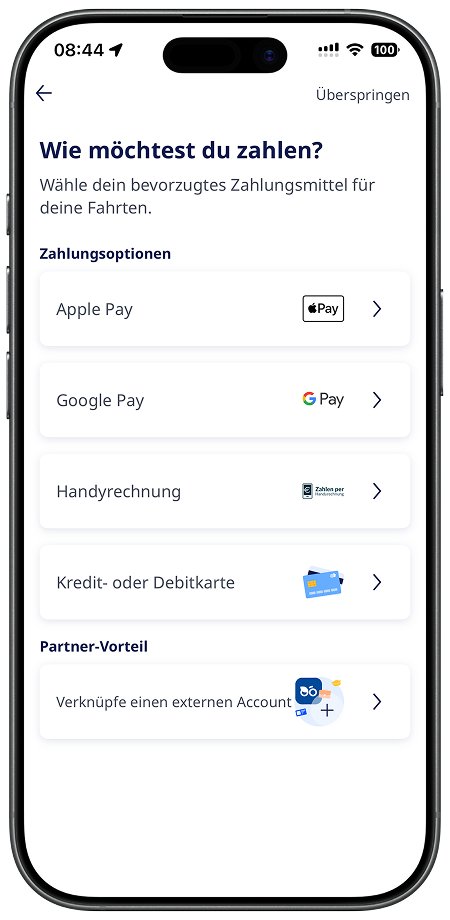
What it gives you:
Just a phone number
No card details or account setup needed to start.
No sign-up at checkout
it works inside the existing app or session.
Built for micropayments
ideal for tickets, parking and unlocks where speed is the only priority.
Fast confirmation
the user confirms they payment on their device.
Cards and wallets, for everyone else
No single method covers every mobility moment, so Carrier Billing works best as part of a mix:

Cards
for known users, subscriptions and higher-value transactions, with direct Visa and Mastercard acquiring.

Wallets and account-based methods
Apple Pay, Google Pay and local methods for fast authentication.
The point is coverage: different riders, in different moments, reaching for the method that fits.

Fewer steps, more completed trips
In mobility, the payment is the start of the experience, not the end. If it is quick, users complete it without thinking. If it interrupts them, they may abandon the transaction, and in the worst case, a missed payment can turn into an unpaid journey.
Less input, fewer drop-offs
every field removed is a reason to stay.
Faster confirmation keeps users in the flow
the trip continues instead of stalling at payment.
No setup reaches occasional users
the riders a card-only flow would lose.
Made for real mobility use cases
The right mix for public transport and ticketing, parking, micromobility (bike and scooter sharing), EV charging and car or ride sharing. The pattern is always the same: pay quickly and continue.
Starting a parking session on arrival
Unlocking a bike or scooter without prior setup
Accessing a service where speed is expected
Buying a ticket just before boarding
Extend your payment mix, not rebuild it
Carrier Billing is designed to slot into the payment environment you already run. Add it as an extra payment path alongside your current methods, and test and scale it without touching your stable card flows. You can take the full mix from DIMOCO, or add Carrier Billing to what you already have.
Paying by mobile phone bill has emerged as the primary means of payment for in-app ticket sales over the past few years and is now the most popular payment option for occasional drivers.
Anja Wenmaker
Managing Director, SWB
“The mobile payment method is an important part of our payment mix. It allows us to reach users who would otherwise not be able to purchase tickets.”
Sandy Bachmann
Head of Marketing, Leipziger Verkehrsbetriebe
“Carrier Billing fits well into our payment mix and enables quick and easy access to shared mobility services.”
Tonio Bierhoff
Head of Marketing, Nextbike
Offer a payment mix that fits how people actually use your service, from cards and wallets to faster mobile options like Carrier Billing.
Payment management and operations
Which payment methods should mobility providers offer?
A mix. Cards and wallets are the backbone for repeat users and subscriptions, and Carrier Billing is the express lane for occasional riders and low-value transactions where speed and minimal data entry matter.
Does Carrier Billing replace our existing card processing?
No. It sits alongside your current setup and fills specific gaps, such as guest checkouts or time-sensitive boarding, without requiring changes to your existing acquiring or payment routing.
How does a balanced payment mix affect conversion?
The checkout is often the biggest point of friction in mobility. A one-tap option like Carrier Billing captures occasional users who would otherwise drop off when asked to register a card or create an account.
Is this suitable for low-value, high-frequency transactions?
Yes. It is built for micropayments like parking sessions and bike unlocks, where manual data entry is out of proportion to the transaction value.
How complex is the integration into our current PSP setup?
Most operators extend their current environment rather than replace it. Carrier Billing is added as an extra payment path, so you can test and scale it without affecting your card flows.
How do we handle occasional users versus registered commuters?
Support both. Keep cards and wallets for your registered base and offer a fast path for one-off purchases so spontaneous users can pay and move on.